Reading in Philippine History Class Foundation University and Negros Oriental History ,Cultural and Heritage Society in the Heritage Clean Up drive in the Dumaguete American Cemetery Daro ,Dumaguete City
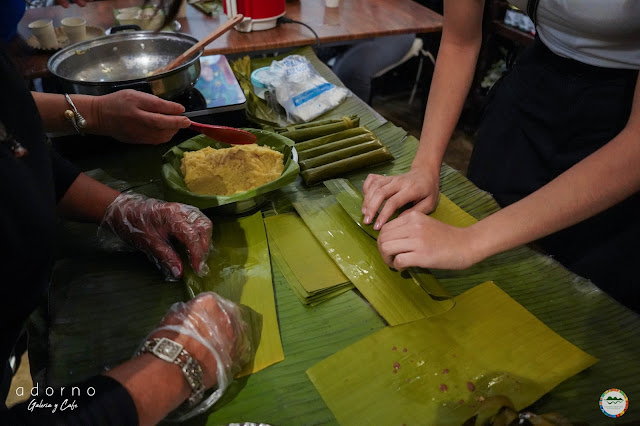
Introduction to Budbud Kabog Budbud Kabog, also known locally as Dawa, is a traditional Filipino cake made from kabog millet. The term "kabog" refers to the millet, which is milled to create this distinctive delicacy. The name "Budbud" refers to the cake itself, and its color, similar to that of a bat, gives the millet its name. Originating from Cebu and Negros Oriental in the central Visayas Islands of the Philippines, Budbud Kabog stands out for its unique texture and flavor, which differ from the more common rice-based native cakes found throughout the Philippines. Traditional Preparation Method To prepare Budbud Kabog, fresh kabog millet is first rinsed thoroughly in two to three changes of water and then drained. Coconut milk is boiled in a pan until it slightly reduces, after which the kabog millet is added to the coconut milk. The mixture is stirred continuously for 30-35 minutes. About 20 minutes into the cooking, sugar is added to taste. There i...
Based on the historic 1905 photograph, the building identified as the McIntyre Residence on the Silliman Institute campus was a striking example of early 20th-century architecture in the Philippines, blending American colonial design with tropical adaptations. While historical records do not extensively detail the McIntyre family's role as "theatre pioneers," the house itself offers a fascinating look into the life of early American educators in Dumaguete. Architectural Features and Style The residence was a substantial two-story structure, reflecting a style often seen in the homes of American faculty during the establishment of Silliman. Its design was both functional for the tropical climate and representative of the era's architectural trends. Mixed-Material Construction: The ground floor was built with solid, light-colored masonry, likely stone or concrete. This provided a sturdy foundation and kept the lower level cool. The small, barred windows on this floor ...
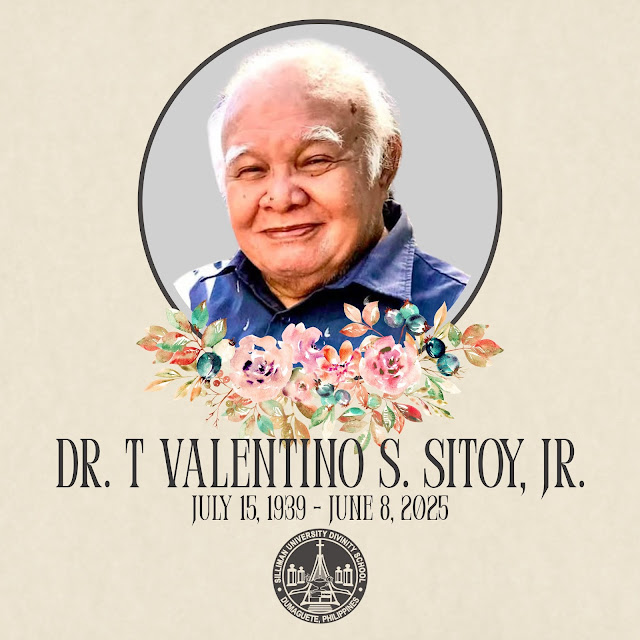
A Tribute to Dr. Tranquilino Valentino S. Sitoy Jr. Brilliant Mind, Humble Spirit, Eternal Mentor There are rare individuals whose lives seem to hold the light of many worlds—scholar, servant, teacher, theologian, historian, mentor, friend. Dr. Tranquilino Valentino S. Sitoy Jr. was such a soul, a luminary whose wisdom, humility, and humanity shaped generations across nations, disciplines, and faiths. His passing is not just the loss of an extraordinary educator, but the quiet fading of a constellation that once lit the minds and hearts of many. Dr. Sitoy's academic and ecclesial achievements are monumental, almost too vast to recount fully. A 2002 Metrobank Foundation Outstanding Teacher of the Philippines (College Division) awardee, he was a name synonymous with excellence. He served as Adjunct Professor at Silliman University , Dean of the Silliman University Divinity School (1975–1986) , Graduate School Dean , and Vice President for Academic Affairs at Negros Oriental St...



Comments
Post a Comment